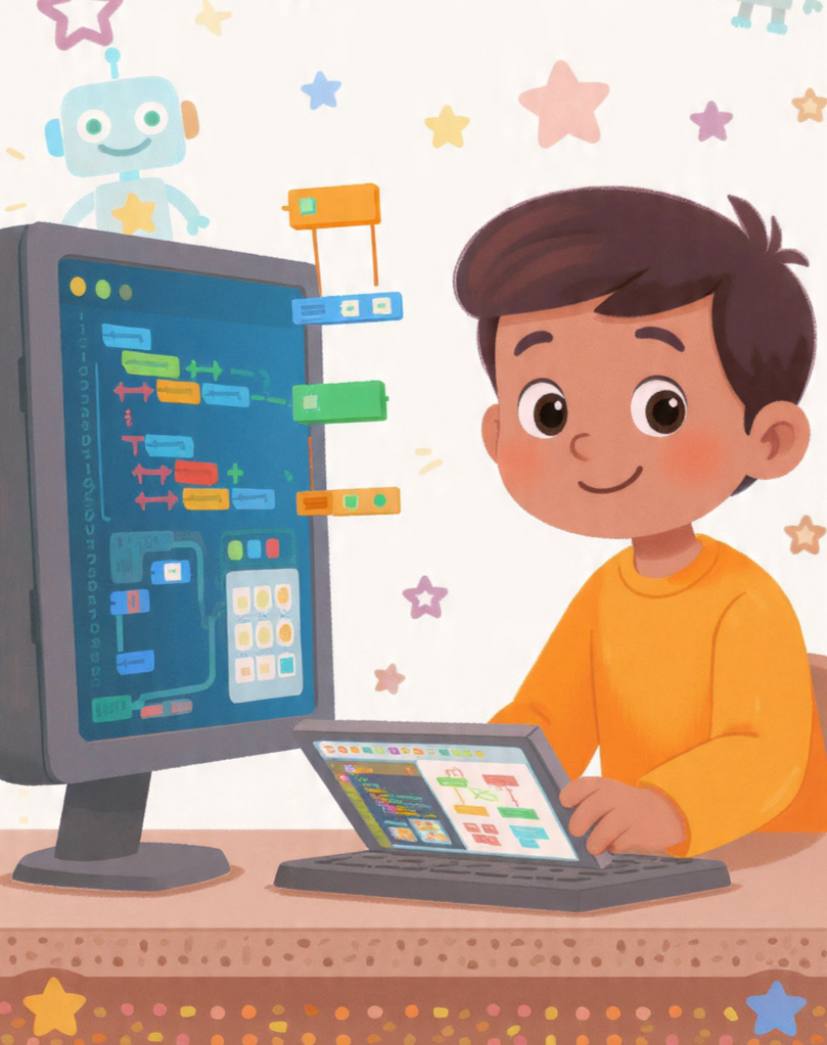
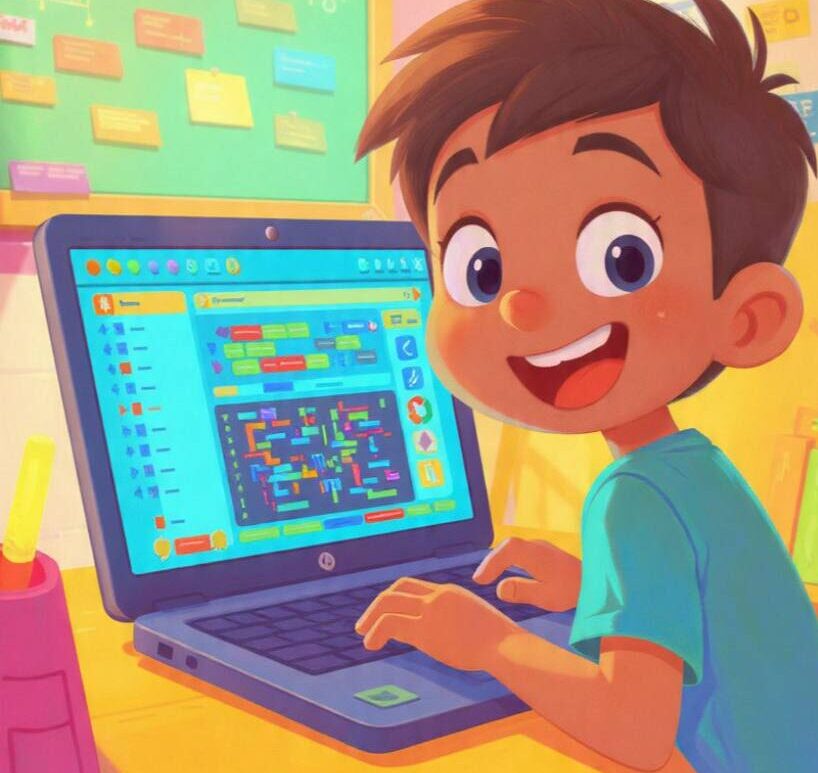
Basic programming concepts help children understand the principles of logic, sequence of instructions, and algorithmic thinking. These skills are taught through fun, interactive activities and games, allowing children to learn by doing and develop genuine interest in programming.
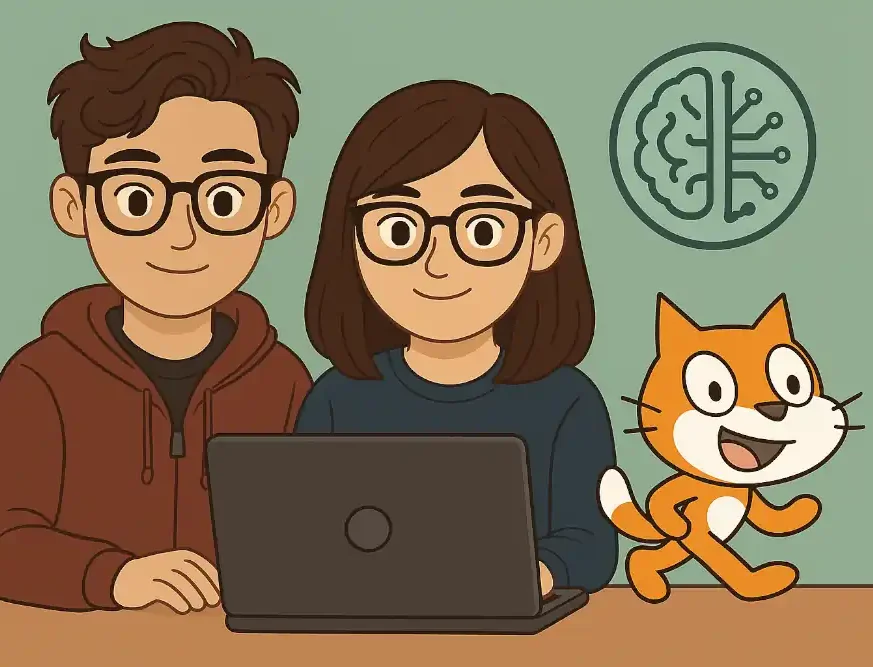
These skills also serve as a foundation for more advanced courses such as Scratch Junior and Turtle Game, giving children a strong base to enter the world of programming without feeling overwhelmed.

Turtle CodeGame is a short, skill-based course for children that introduces basic programming concepts through fun activities and games.
This course is a prerequisite for Turtle Junior and helps children become familiar with logic, algorithmic thinking, and fundamental coding principles.
In this course, children explore basic programming concepts through curiosity and creativity, learning how to turn simple ideas into logical sequences using instructions and algorithms.
Introduction to logic, instructions, sequencing, and simple algorithms through games and hands-on activities.
Practice solving small problems with creative and child-friendly methods.
Review of learned concepts and preparation for advancing to Turtle Junior.
Number of sessions: 4
Session duration: 60 minutes
Method: hands-on and game-based
By the end of the course, children will:
Be familiar with basic programming concepts
Experience algorithmic thinking and problem-solving
Be ready to progress to Turtle Junior , Turtle Game 1
Learning programming at an early age strengthens logical thinking and problem-solving skills. By practicing algorithms and structuring instructions, children learn to analyze problems step by step and create creative solutions.
Furthermore, early exposure to programming prepares children for a digital future, boosting their confidence in using technology and digital tools. This foundation supports both academic success and future career-related skills.