In this course, children and teenagers aged 8 to 16 get familiar with programming concepts in a simple, visual way. Using the Scratch environment, students learn programming logic without any need for text-based coding. By creating games, animations, and interactive stories, they enhance their digital creativity while simultaneously developing important skills such as logical thinking, problem-solving, and working on step-by-step projects in an engaging and practical manner.
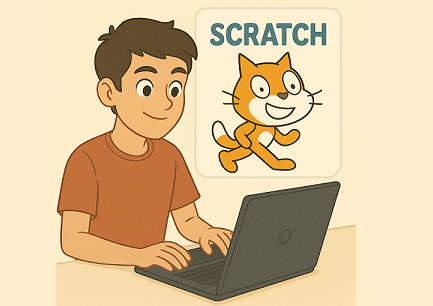
The Turtle ProGame course is a comprehensive, project-based educational program for learning programming with Scratch, specifically designed for children and teenagers aged 8 to 16. In this course, students can learn programming concepts from basic to advanced, step by step and practically, using only Scratch’s visual blocks, without any prior programming knowledge.
Scratch is a visual programming language developed by the MIT Media Lab, designed to teach programming concepts in a simple and understandable way for children. In this learning environment, students can create games, animations, interactive stories, and creative projects while simultaneously developing logical thinking and problem-solving skills.
The Turtle ProGame course content is specifically designed for two different age groups so that each student receives instruction suited to their cognitive level and learning pace. The learning path starts with simple concepts and gradually progresses to more complex and challenging projects.
All games, animations, and projects in this course are fully custom-designed and coded, so students do not encounter pre-made or repetitive projects. This approach ensures that children have a completely unique, creative, and in-depth programming experience.
The main goal of the course goes beyond teaching basic concepts and focuses on the holistic development of students’ cognitive and technical skills. By the end of the course, children and teenagers will be able to:
Understand basic and advanced programming concepts such as conditionals, loops, variables, and events
Strengthen logical, algorithmic, and computational thinking
Increase creativity through designing digital projects
Develop step-by-step problem-solving skills
Improve teamwork and project presentation skills
Prepare for global Scratch competitions
The Turtle ProGame course structure is designed so that students are fully prepared to participate in international Scratch competitions upon completion. By focusing on creating standard, creative, and presentable projects, students reach a level where they can actively compete on the global stage.
| Age Group | Educational Level | Types of Projects | Course Length | Prerequisite |
|---|---|---|---|---|
| 8–10 years | Beginner to Advanced | Simple to advanced games and animations | 45 sessions | Basic computer skills and completion of Turtle Algo course |
| 10–16 years | Beginner to Advanced | Interactive games and complex animations | 48 sessions | Turtle Algo course |
| Mode | Sessions per Week | Duration | Platform | Support |
|---|---|---|---|---|
| Online | 2 sessions | 1 hour | Google Meet | Homework, problem-solving support, and online guidance via Telegram |
Classes are conducted live, interactively, and with practical exercises, and students receive continuous educational support throughout the course.
Familiarity with motion, looks, and sound blocks
Working with conditionals, loops, and events
Defining and using variables, lists, and clones
Designing game logic, scoring, and levels
Creating interactive games and animations
Enhancing focus and working memory
Increasing confidence in problem-solving
Developing logical, critical, and creative thinking
Encouraging teamwork and constructive interaction
Improving project presentation and explanation skills
Throughout the course, students participate in both digital projects and complementary educational activities, including:
Playing tabletop memory games to improve focus and pattern recognition
Building a digital xylophone to learn about sound, events, and user interaction
Designing games such as mazes, Mars Rescue, and Connect 4
Creating interactive stories and educational animations
✔ Systematic programming education with Scratch
✔ Suitable for children and teenagers aged 8–16
✔ Exclusive, project-based content
✔ Safe and standard learning environment (developed by MIT)
✔ Prepares students for advanced paths such as Python and Artificial Intelligence
The Turtle ProGame course is a complete, safe, and professional educational path for introducing children and teenagers to the world of programming. This course not only teaches technical skills but also strengthens logical thinking, creativity, and confidence, providing a solid foundation for your child’s digital future. Scratch serves as a reliable launching pad for learning advanced programming languages and entering the world of technology.
Learning programming at an early age supports the cognitive development of children and teenagers and improves their analytical skills, focus, and algorithmic thinking. Early exposure to programming not only strengthens creativity and self-confidence but also prepares children for a digital future, providing a solid foundation for learning more advanced skills and making logical decisions in the world of technology.




The teaching approach is very suitable for children. Difficult concepts are explained in a simple way, and the students are truly engaged in the class rather than just listening passively.
I was pleased that they have specific outcomes for each semester. My daughter has created several games and animations, and her self-confidence has increased. Ms. Mohammadi gives accurate feedback, and her teaching is really great.
My son is 10 years old and had no experience in programming before this. During this period, he was able to make games and is very proud of himself. Ms. Azadeh’s explanations are clear and understandable.
My son is 14 years old, and he really liked this programming course
And thank you for your patience and good teaching, Ms. Mohammadi♥️♥️🙏🏼