A Complete Guide to Choosing the Best Learning Method:
In today’s digital world, learning programming has become an essential skill for children. Many parents are looking for the best way to introduce their kids to coding, but they often face an important question:
Are online learning better than in-person classes?
Each method has its own advantages and challenges, and making the right choice can significantly impact a child’s interest, learning experience, and progress. In this article, we’ll explore the key differences between online and in-person programming education for kids to help you choose the best path.
Why Learning Programming Is Important for Kids
Before comparing the two methods, let’s understand why coding is so valuable:
- Improves logical thinking and problem-solving skills
- Boosts creativity
- Prepares children for future careers
- Enhances focus and cognitive abilities
Now the main question is: What’s the best way to learn it?
Online Programming Education for Kids
Advantages
1. Easy Access from Anywhere
Children can learn from top instructors without geographical limitations.
2. Saves Time and Money
No commuting means lower costs and less fatigue.
3. Flexible Scheduling
Classes can be adjusted to fit the child’s daily routine.
4. Greater Variety of Courses
Online platforms often offer more options, such as Scratch, Python, and game development.
5. Builds Real Digital Skills
Kids learn how to use computers, online tools, and digital platforms effectively.
Disadvantages
1. Requires Self-Discipline
Children need to stay focused on themselves.
2. Potential Distractions at Home
The home environment can reduce concentration.
3. Less Social Interaction
Limited face-to-face communication with peers.
In-Person Programming Classes for Kids: Benefits and Challenges
Advantages
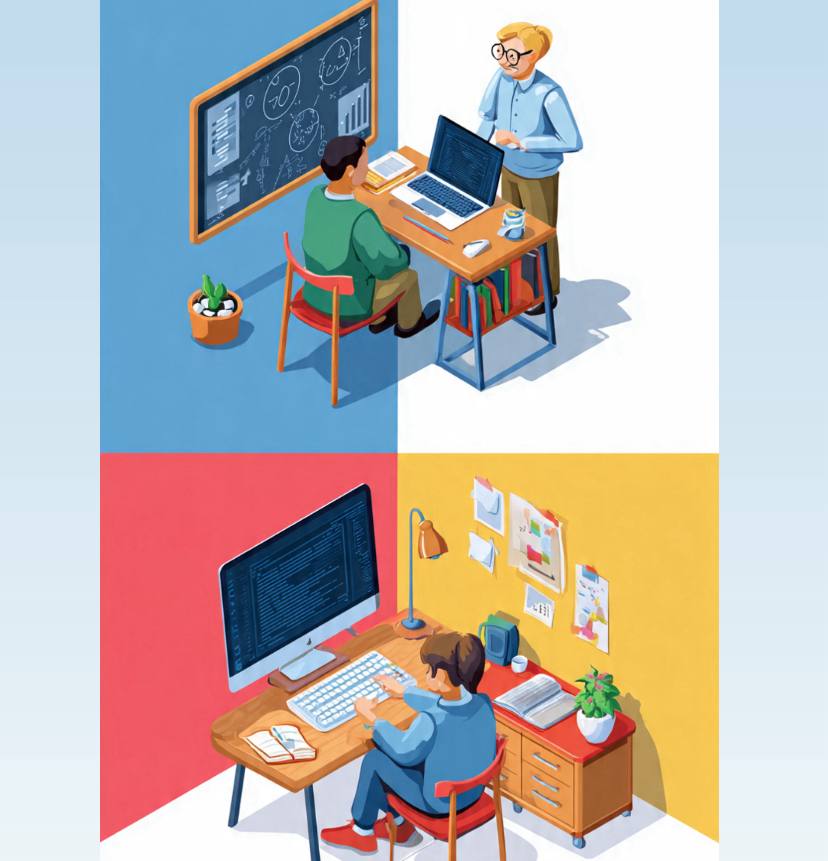
1. Direct Interaction with the Instructor
Children can ask questions and receive immediate feedback.
2. Structured Learning Environment
Classroom settings provide more discipline and routine.
3. Stronger Social Connections
Kids interact, collaborate, and make friends.
4. Better Supervision
Teachers can more closely monitor progress and engagement.
Disadvantages
1. Location Limitations
You are restricted to nearby classes.
2. Higher Costs
Includes tuition and transportation expenses.
3. Time-Consuming Commutes
Travelling can be tiring for children.
4. Fewer Course Options
Not all institutions offer a wide range of topics.
Online vs In-Person Programming Classes for Kids: Key Differences
| Feature: Online Learning, In-Person |
|
on Learning |
| Accessibility |
Very High |
Limited |
| Cost |
Lower |
Higher |
| Social Interaction |
Lower |
Higher |
| Flexibility |
High |
Low |
| Focus |
Depends on the child |
More controlled |
| Course Variety |
Wide |
Limited |
Choosing Between Online vs In-Person Programming Classes for Kids
The best choice depends on your child’s personality and needs:
Online Learning Is Better If:
- Your child is comfortable using a computer
- They have a reasonable level of focus
- You need flexible scheduling
- You want access to better or more diverse instructors
In-Person Learning Is Better If:
- Your child needs social interaction
- They have difficulty focusing at home
- They are new to structured learning
- They benefit from a more guided environment
Best Option: A Hybrid Approach
In many cases, the best results come from combining both methods:
- Online classes for learning concepts
- In-person workshops for practice and interaction
Conclusion
There is no single “best” method for every child.
The right choice is the one that matches your child’s personality, learning style, and needs.
If your goal is to help your child:
- Become more creative
- Develop problem-solving skills
- Prepare for the future
Then the most important factors are the quality of education and your child’s interest, not just the format.