Artificial Intelligence for Kids: How to Teach AI in a Simple Way?
Artificial Intelligence (AI) is no longer a technology limited to experts and researchers. Today, it has become a part of our everyday lives. From voice assistants and search engines to smart games and educational tools, children interact with artificial intelligence in many ways, often without even realizing it.
This is why introducing children to the basic concepts of AI from an early age can help them better understand the technology around them and develop the skills needed for the future. However, teaching artificial intelligence to children does not mean introducing complicated formulas or advanced programming concepts. Instead, AI can be explained through simple examples, stories, games, and creative projects that match a child’s age and learning level.
In this article, we will explore artificial intelligence for kids, explain AI in a child-friendly way, discuss the best teaching methods, and explore how programming can help children build a strong foundation for understanding AI.
What Is Artificial Intelligence?
Artificial Intelligence, or AI, is a technology that allows computers and machines to perform tasks that usually require human intelligence.
In simple words, AI helps computers learn, recognize patterns, make decisions, and solve problems.
Some everyday examples of artificial intelligence include:
- Face recognition on smartphones
- Voice assistants such as Siri and Google Assistant
- Video recommendations on YouTube
- Online translation tools
- Smart robots
- AI-powered educational applications
Although AI can perform tasks that seem intelligent, it does not think or understand like humans. Instead, it analyzes large amounts of information, learns from examples, and uses algorithms to provide useful results.
How to Explain Artificial Intelligence to Children?
When teaching AI to children, it is important to avoid complicated technical explanations. Children understand new ideas better when they are connected to things they already know.
For example, you can explain AI like this:
Imagine we want to teach a robot how to recognize a cat and a dog.
First, we show the robot many pictures of cats and dogs.
Over time, the robot learns some differences:
- Cats usually have pointed ears.
- Dogs often have different face shapes.
- Their body features are not the same.
After seeing many examples, the robot can look at a new picture and make a prediction about whether it is a cat or a dog.
This is a simple example of how artificial intelligence learns from data.
Artificial Intelligence vs. Programming: What Is the Difference?
Many parents ask whether artificial intelligence is the same as programming.
The answer is no.
Programming means writing instructions that tell a computer exactly what to do.
For example:
If the traffic light is red → stop.
In traditional programming, humans create most of the rules.
However, artificial intelligence can learn from data and examples instead of depending only on instructions written by humans.
For example, instead of manually teaching a computer every possible feature of a cat, we can provide thousands of images and allow an AI system to learn patterns by itself.
This is why programming is often considered an important first step toward understanding artificial intelligence.
Why Should Children Learn About Artificial Intelligence?
Technology is changing quickly, and artificial intelligence will play an important role in many areas of life and work in the future.
Learning about AI can help children develop important skills such as:
- Logical thinking
- Problem-solving abilities
- Creativity
- Digital literacy
- Understanding of modern technology
- Critical thinking skills
The goal of teaching AI to children is not to turn every child into an AI engineer. Instead, it is about helping them understand the technology they use every day and preparing them to become confident creators in a digital world.
What Is the Best Age to Teach Artificial Intelligence?
The best age to introduce AI depends on the child’s age, interests, and learning style.
Children do not need to start with advanced concepts. AI education can begin with simple activities and gradually become more advanced.
Ages 5 to 7: Learning Through Play
At this age, children can learn basic ideas related to artificial intelligence through:
- Educational games
- Stories about robots
- Pattern recognition activities
- Simple problem-solving challenges
The focus should be on curiosity and exploration rather than technical details.
Ages 8 to 10: Introduction to AI Concepts
Children in this age group can begin exploring:
- Basic AI concepts
- Simple programming projects
- Visual coding platforms
- Interactive games and animations
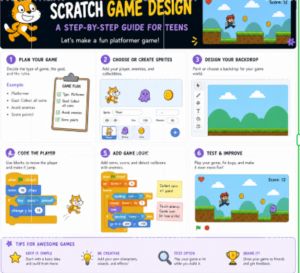
Tools such as Scratch can help children understand logic, patterns, and how computers follow instructions.
Ages 10 and Older: Building AI Foundations
Older children and teenagers can start learning more advanced concepts, including:
- Algorithms
- Data and patterns
- Machine learning basics
- Python programming
- Simple AI projects
At this stage, children can move from simply using technology to creating their own digital projects.
Do Children Need to Learn Programming Before Artificial Intelligence?
One common question among parents is whether children need to learn programming before starting artificial intelligence.
In most cases, learning programming first is a great advantage because programming helps children develop the fundamental skills needed to understand how technology works.
Programming teaches children important abilities such as:
- Logical thinking
- Step-by-step problem solving
- Creating solutions
- Understanding algorithms
- Breaking complex problems into smaller parts
For younger children, visual programming languages like Scratch are a great starting point. They allow children to create games, animations, and interactive projects while learning basic programming concepts.
As children become more experienced, they can move to text-based programming languages such as Python, which is widely used in artificial intelligence and machine learning projects.
By building programming skills first, children can better understand how AI systems are designed and how they can create their own intelligent applications in the future.
Teaching Artificial Intelligence Through Games
Children learn best when learning feels fun and engaging. Games and hands-on activities are some of the most effective ways to introduce artificial intelligence concepts.
Here are some simple AI learning activities for children:
Image Recognition Game
Ask children to separate pictures into different groups, such as animals, objects, or colors.
Then explain that AI systems can also learn to recognize and classify images by analyzing many examples.
For example, an AI model can learn the difference between cats and dogs by studying thousands of pictures.
Emotion Recognition Activity
Show children pictures of different facial expressions and ask them to identify emotions such as happiness, surprise, or sadness.
Then explain that some AI systems can analyze images and recognize patterns in human expressions.
This activity helps children understand how computers can process information from the world around them.
Pattern Recognition Games
Pattern recognition is one of the important foundations of artificial intelligence.
Children can practice this skill through:
- Number patterns
- Color sequences
- Shape activities
- Logic puzzles
These activities help children understand how machines identify patterns and make predictions.
Best Artificial Intelligence Tools for Kids
Many educational tools make learning artificial intelligence easier and more enjoyable for children. These platforms allow students to experiment with AI concepts through creative projects without needing advanced programming skills.
Some popular AI learning tools for children include:
Scratch
Scratch is one of the most popular programming platforms for children. It helps students create games, animations, and interactive projects while developing computational thinking skills.
Children can also explore AI concepts by combining Scratch projects with simple machine learning activities.
Machine Learning for Kids
This platform introduces children to basic machine learning concepts through simple projects.
Students can train computer models to recognize:
Then they can use their trained models in creative projects.
Teachable Machine
Teachable Machine allows children to create simple machine learning models without writing complex code.
For example, students can train a model to recognize:
- Different objects
- Hand movements
- Sounds
This makes machine learning more understandable and interactive.
Python
For older children and teenagers, Python is one of the best programming languages for exploring artificial intelligence.
Python is widely used in:
- Machine learning
- Data science
- Automation
- AI applications
Learning Python helps students move from basic AI concepts to more advanced projects.
The Role of Scratch in Artificial Intelligence Education
Scratch plays an important role in introducing children to technology and programming.
Because Scratch uses a visual block-based programming environment, children can focus on creativity and problem-solving instead of worrying about complex syntax.
Through Scratch projects, children can learn:
- How programs work
- How instructions control computers
- How to design interactive experiences
- How algorithms solve problems
Scratch can also be combined with AI activities to help children understand concepts such as:
- Data
- Patterns
- Classification
- Machine learning
For many children, Scratch is the first step toward becoming confident creators of technology.
Can Artificial Intelligence Reduce Children’s Creativity?
Some parents worry that artificial intelligence may reduce children’s creativity. However, when used correctly, AI can actually become a powerful tool for creative learning.
Artificial intelligence can help children:
- Generate new ideas
- Create stories
- Design digital projects
- Explore different solutions
- Improve their creative thinking
The important point is that children should not only use AI as a tool for getting answers. They should learn how to ask questions, experiment, evaluate results, and use AI responsibly.
AI should support creativity, not replace imagination.
How Can Parents Support Artificial Intelligence Learning?
Parents play an important role in helping children develop an interest in artificial intelligence and technology. They do not need to be AI experts to support their children’s learning. The most important thing is to create a positive environment where children feel encouraged to explore, ask questions, and experiment.
Parents can support AI learning by:
- Talking with children about how technology works
- Encouraging curiosity and asking questions
- Introducing age-appropriate educational tools
- Supporting creative technology projects
- Focusing on problem-solving instead of memorizing information
- Teaching children to use AI responsibly and ethically
Instead of seeing technology only as entertainment, parents can help children understand that digital tools can also be used for learning, creativity, and creating new ideas.
Is Artificial Intelligence Difficult for Children?
Artificial intelligence may sound like a complicated subject, but it does not have to be difficult for children.
When AI concepts are introduced through simple examples, games, and practical projects, children can understand the basic ideas behind this technology naturally.
The key to successful AI education is choosing the right learning path:
- Start with simple concepts
- Use visual and interactive activities
- Connect lessons to real-life examples
- Allow children to create their own projects
- Gradually introduce more advanced topics
Children do not need to understand complex mathematical models at the beginning. The first step is developing curiosity and understanding how intelligent technologies work.
The Future of Children in an Artificial Intelligence World
Artificial intelligence is expected to become an important part of many careers and industries in the future. Children who understand technology and learn how to use it creatively will have valuable skills for tomorrow’s world.
Future-ready skills include:
- Programming
- Critical thinking
- Problem-solving
- Creativity
- Data literacy
- Collaboration
- Digital responsibility
Learning AI from an early age helps children become active participants in the digital world. Instead of only using technology created by others, they can learn how to design, build, and improve technology themselves.
The goal of AI education is not only teaching children about machines; it is helping them develop the mindset needed to solve real-world problems.
Conclusion
Artificial intelligence is no longer a technology of the future; it is already part of our daily lives. Teaching AI to children helps them better understand the digital world and prepares them for future opportunities.
The best way to introduce artificial intelligence to children is through simple explanations, creative activities, games, and hands-on projects. By combining AI education with programming skills, children can develop logical thinking, creativity, and problem-solving abilities.
Whether children start with Scratch, educational AI tools, or later move to Python and machine learning, the most important goal is to encourage curiosity and creativity.
Children who learn how technology works today will be better prepared to create the innovations of tomorrow.
Frequently Asked Questions (FAQ)
What is artificial intelligence for kids?
Artificial intelligence for kids means teaching children the basic ideas behind AI in a simple and understandable way. It helps them learn how computers recognize patterns, learn from examples, and make decisions.
What is the best age to teach AI to children?
Children can begin learning basic AI concepts from around 5 or 6 years old through games, stories, and simple activities. More structured AI education can start around age 8 and become more advanced during the teenage years.
Do children need programming skills to learn artificial intelligence?
No, children can learn basic AI concepts without programming. However, learning programming languages such as Scratch and Python helps them better understand how AI systems are created.
Which programming language is best for children interested in AI?
Scratch is a great starting point for younger children because it teaches programming concepts visually. For older children and teenagers, Python is one of the best choices because it is widely used in artificial intelligence and machine learning.
Can artificial intelligence improve children’s creativity?
Yes. When used properly, AI can help children generate ideas, create projects, explore solutions, and develop creative thinking skills. AI should be used as a learning assistant, not a replacement for imagination.
You may also find the following articles useful: